
I was very fortunate to recently visit South Africa and Zimbabwe after a veterinary conference. Since 100% of the pet owners we meet are animal lovers, I thought I would share some information and pictures about his incredible trip.
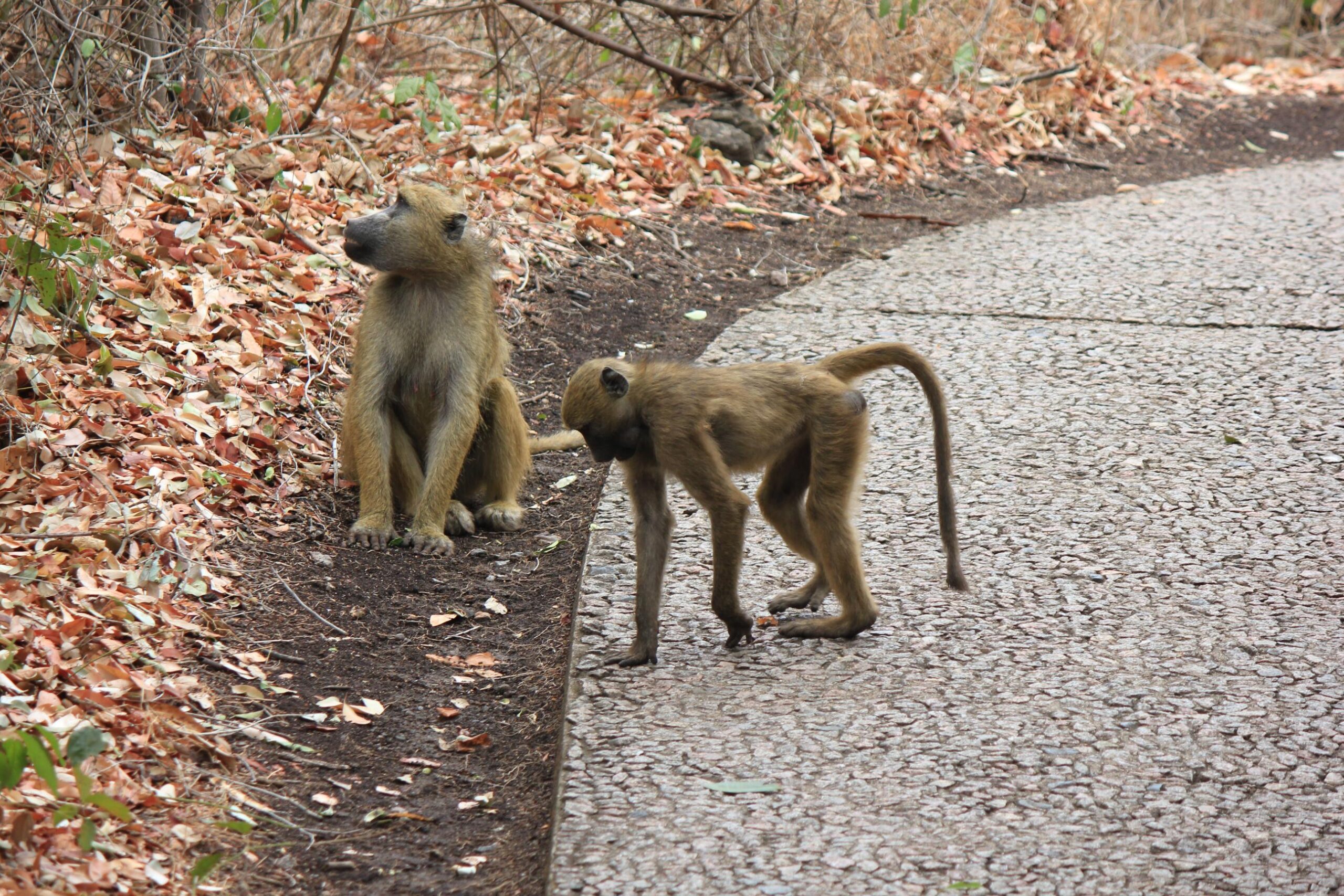
Among the many animals that roam Zimbabwe, the baboon stands out for its intelligence, social structure, and adaptability.
These incredible primates are not just a part of the landscape, but an integral part of Zimbabwe’s natural heritage.
From their complex social lives to their interactions with humans, baboons are a species full of surprises.
A Glimpse into Baboon Society
Baboons are incredibly social animals, living in large troops from 20 to over 100 individuals.
These groups are highly organized, with a strict hierarchy that governs every interaction.
Males dominate the troop, but it’s the females who often form the most important bonds.
Female baboons develop lifelong friendships, providing each other with support and protection, while males come and go, depending on their rank.
The social structure is complex, and within this community, communication is key.
Baboons use a wide range of vocalizations, facial expressions, and gestures to convey information – everything from a simple greeting to a warning about approaching predators.
A well-known call, that sounds like “wahoo,” signals danger, alerting the entire troop.
Life in the Wild: Adaptability and Intelligence
The baboon is an adaptable species, thriving in a wide range of habitats across Zimbabwe.
Whether it’s the arid bush, lush forests, or towns, baboons have proven their ability to survive and flourish.
Their intelligence is another striking feature.
Baboons have been observed using tools – such as rocks – to crack open nuts or as weapons to defend themselves.
This ability to use objects in their environment is a sign of their problem-solving skills, putting them on par with some of the most intelligent animals in the wild.
A Complex Relationship with Humans
The relationship between baboons and humans in Zimbabwe is complex.
On the one hand, baboons are an integral part of the country’s ecosystems, helping to disperse seeds and maintain the biodiversity of their habitats.
On the other hand, their adaptability often leads them into conflict with humans.
In regions where baboons and humans share space, these primates sometimes raid crops or even invade urban areas in search of food.
In tourist areas, baboons are notorious for grabbing food from unattended backpacks and picnic spots, making them both fascinating and frustrating (and scary) for locals and visitors alike.
This has led to a delicate balancing act, with conservationists and wildlife managers working hard to mitigate the negative impacts, while ensuring that baboons can continue to thrive in the wild.
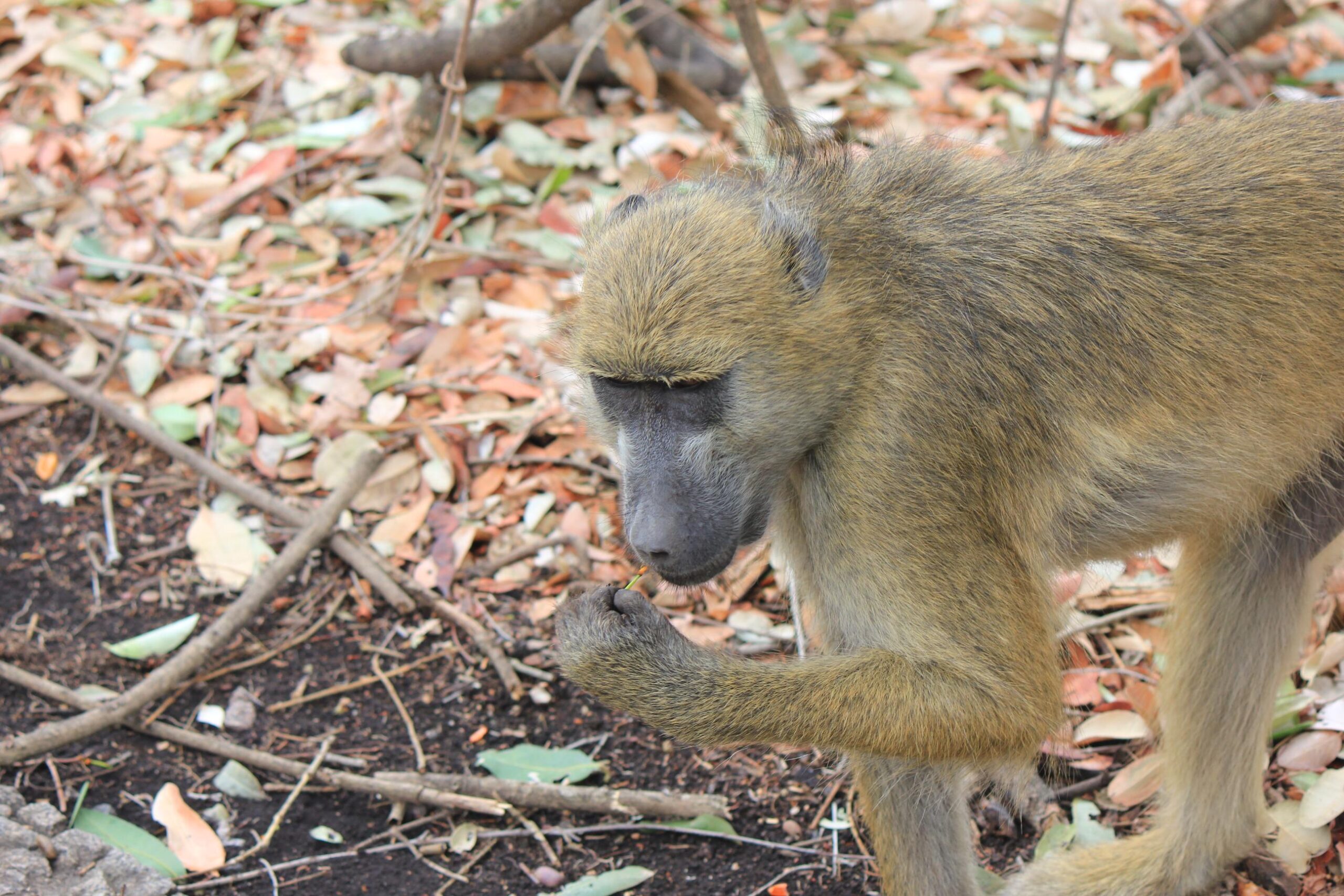
Physically, baboons are striking creatures.
They are large primates, with males being significantly larger than females.
Their long muzzles and sharp canine teeth give them a distinctive look, while their fur, typically brown or gray, blends into the natural environment.
Their impressive physical strength helps them defend their troops from predators, such as leopards and lions.
Baboons are also skilled at detecting threats, often keeping watch for predators with the help of sentinels who stand guard and sound alarms if danger approaches.
Though they may seem fierce, baboons are also playful and curious, especially the younger ones.
Juvenile baboons engage in games and social activities that help them develop survival skills.
They can be seen swinging from trees, chasing each other, and learning the ropes of life in the troop.
These early experiences help them prepare for the more serious aspects of baboon life, including foraging, protecting the troop, and navigating their complex social world.
Vital Roles in Ecosystems
Beyond their social lives, baboons play a crucial role in maintaining the health of their ecosystems.
As omnivores, their diverse diet includes fruits, seeds, and even small mammals and insects.
They are also known to eat shellfish along coastal regions, showcasing their adaptability in different environments.
By eating a wide variety of foods and dispersing seeds through their feces, baboons help to promote plant diversity and the overall health of their habitats.
In addition to their dietary contributions, baboons also help to control insect populations, making them an important part of the food chain.
Their presence in the wild is vital to maintaining the balance of Zimbabwe’s diverse ecosystems.
A Day in the Life of a Baboon
A typical day starts early in the morning, when the troop emerges from their sleep site, which are usually located in trees to protect them from predators.
They spend the day foraging, socializing, and keeping an eye out for threats.
When evening falls, the troop returns to their sleep site, with older, stronger baboons often keeping watch to ensure the safety of the group.
Despite their rough and tough exterior, baboons are deeply devoted to their families.
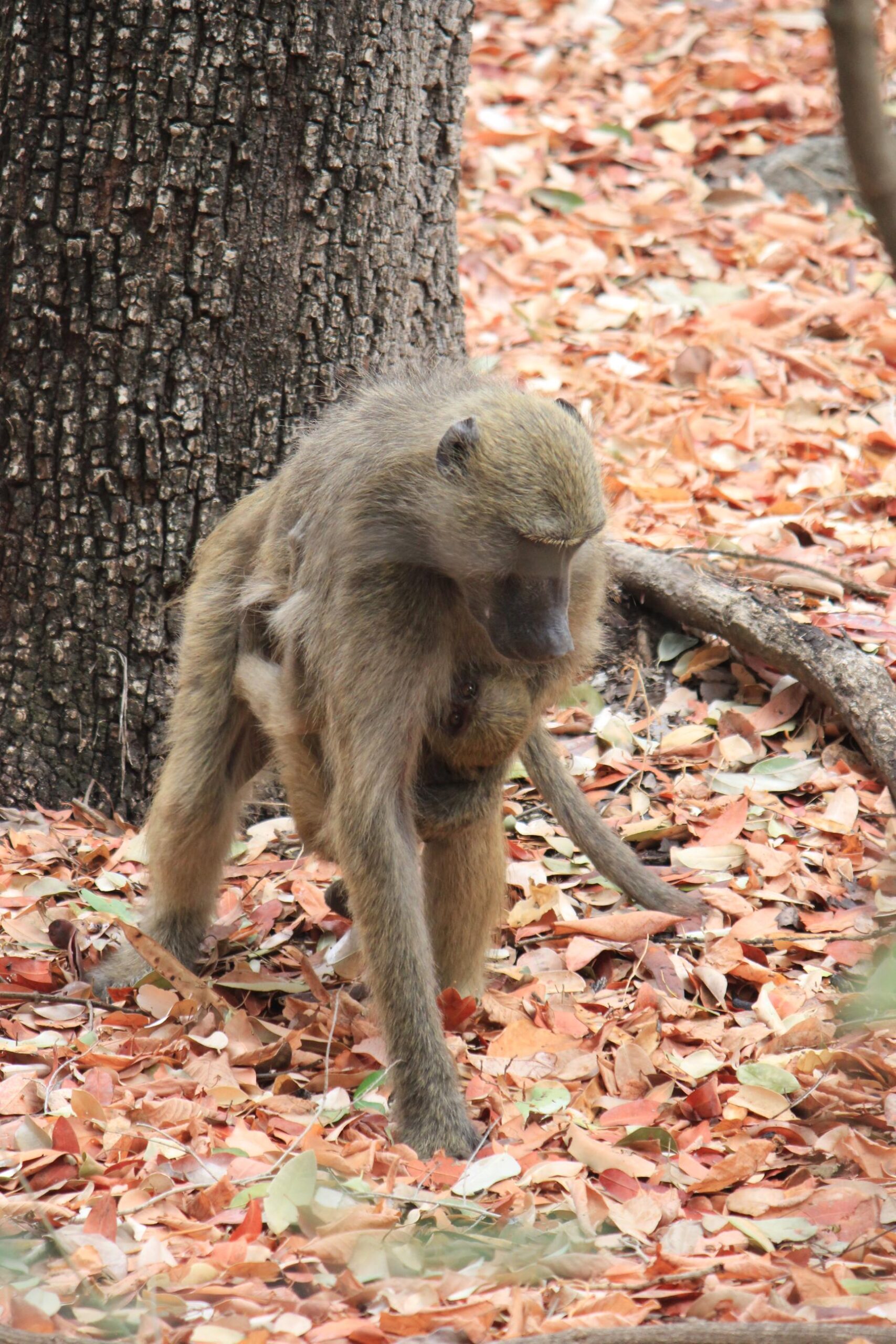
Female baboons are known for their protective nature toward their young.
The bond between mother and baby is strong, and the babies rely on their mothers for food, protection, and social learning.
It’s not uncommon to see a mother carrying her baby on her back or holding it close as she navigates through the trees or on the ground.
The baboon is a remarkable animal, whose intelligence, adaptability, and complex social structures make it one of the most fascinating species in the animal kingdom.
From their playful interactions to their important role in ecosystems, baboons are more than just a symbol of wild Africa – they are key players in the survival of their habitats.
Their complex relationship with humans and the challenges they face in an ever-changing world remind us of the delicate balance between wildlife and their environment.
We can’t help your baboon, but if you would like to learn how we can help your cat or your dog with safe surgery and anesthesia, please contact us through www.LRVSS.com
Never miss a blog by subscribing here: www.LRVSS.com/blog
Phil Zeltzman, DVM, DACVS, CVJ, Fear Free Certified