
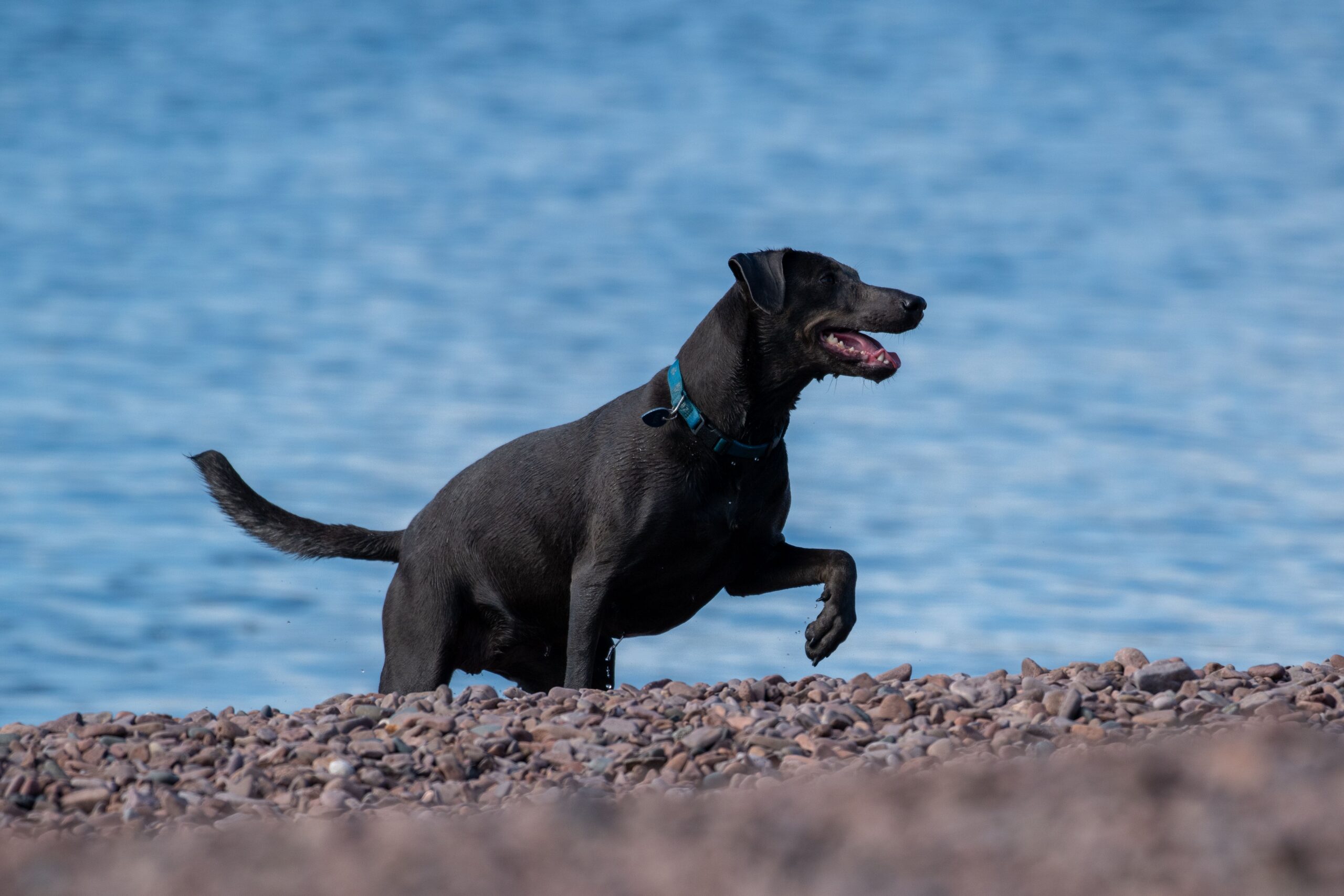
This can cause repeated (or recurrent) Urinary Tract Infections (UTIs), skin infections, and sometimes incontinence.
The goal of surgery is to remove the excess skin and end the annoying vicious cycle.
What Is a Redundant Vulvar Fold in Dogs?
It may sound a little weird, but a surprisingly high number of female dogs have an extra (aka redundant) skin fold that covers part or all of the vulva.
What Are Other Names For a Redundant Vulvar Fold?
Strangely enough, there are multiple other names to call his condition.
- Recessed vulva
- Hooded vulva
- Juvenile vulva
- Hypoplastic vulva
- Inverted vulva
- Sunken vulva
- Buried vulva
How Does a Vulvar Skin Fold Cause Bladder Infections?
After a dog urinates, urine “sits” between the extra skin fold and the vulva.
Normal skin bacteria thrive in this moist, dark, warm environment and multiply.
That can lead to:
- Skin irritation or infection around the vulva
- Bacteria going up the urethra (which is wider in a female), into the bladder
- Bladder infections
- Sometimes urinary incontinence
Classically, these dogs have multiple bladder infections over months to years.
They get antibiotics and improve… until the next time.
Only a thorough exam leads to the discovery of the extra skin.
Case Example: Daisy’s Story
Daisy, a 6-year-old spayed Labrador retriever, came to LRVSS with her 4th UTI in 14 months.
Each time, her owner saw the same signs: frequent urinating, licking at her back end, and the occasional small bloody puddle in the house.
Each time, antibiotics cleared things up.
Sadly, within a few months, the signs were back.
Her owners were frustrated, and Daisy was uncomfortable.
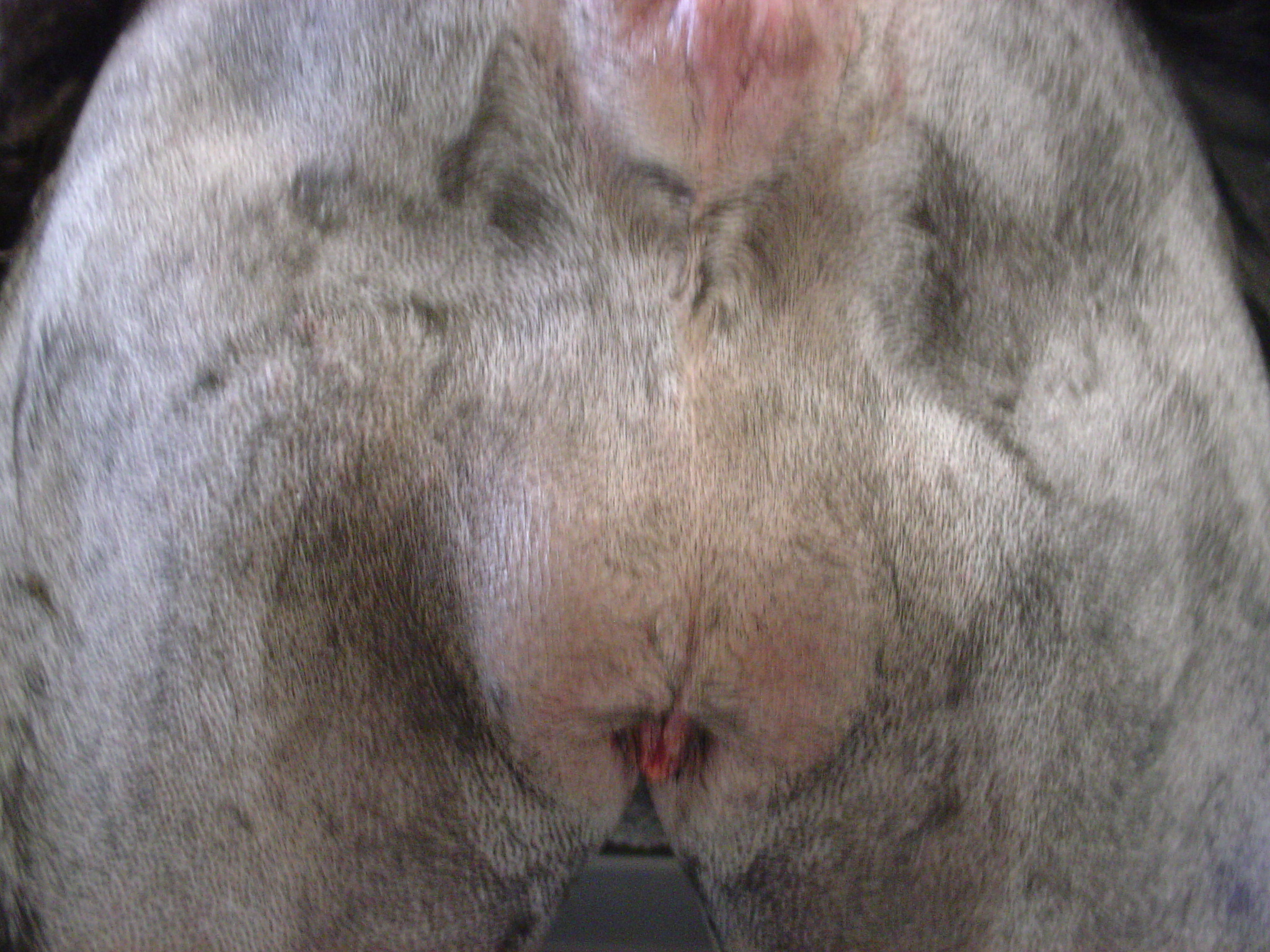
During her exam, we examined her closely, and we found what had been missed: a big fold of skin partly covering her vulva, with red, irritated skin underneath.
We recommended a vulvoplasty (aka episioplasty), along with a weight-loss plan.
What Is a Vulvoplasty, and What Does Surgery Involve?
Vulvoplasty (or episioplasty) is basically cosmetic surgery of the vulva.
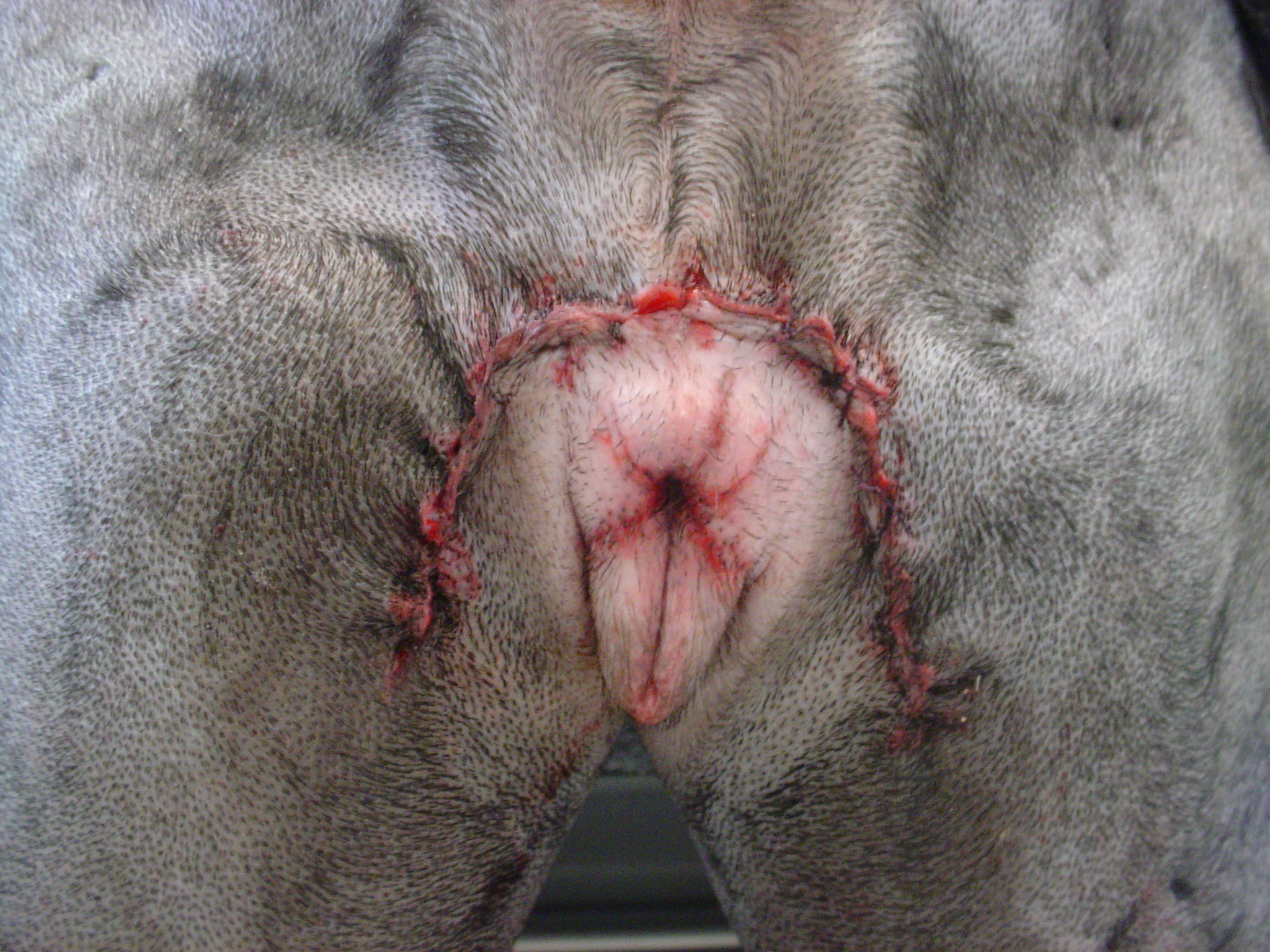
The solution is just what you’d imagine: we remove just the right amount of skin, then suture the remaining skin back together.
If you remove too much skin, you’re in big trouble, because that can lead to an open wound – and a nightmare to heal.
If you don’t remove enough skin, then the end result won’t be as good.
This is where experience is critical, to remove exactly the right amount of skin.
We typically get excellent results, sometimes life-changing, both for the patient and the owner.
After surgery, dogs wear a plastic cone while the incision heals.
And after 3 weeks of healing, we’re done!
How Did Daisy Do After Surgery?
Daisy healed without complications.
The irritated skin calmed down, and with her new weight-loss plan, she became more comfortable and more active.
Over a year later, she has had no further UTIs.
Are There Other Causes of Bladder Infections and Incontinence in Dogs?
Of course, other causes exist and need to be investigated.
These include bladder stones, hormone-related incontinence, anatomical abnormalities, and underlying diseases such as diabetes.
A vulvar fold is one possible cause, not the only one.
That’s why we start with a thorough physical exam.
What Did Daisy’s Owner Think of The Surgery?
Daisy’s owner wrote: “Thank you so much for your help with Daisy’s successful surgery. She’s like a new dog. No more infections, no more licking, and no more antibiotics! We can’t thank you enough for improving her quality of life so dramatically (and ours too).”
Frequently Asked Questions
1. Why does my dog keep getting UTIs?
Ongoing (or recurrent) UTIs have several other possible causes, including bladder stones, hormonal incontinence, anatomical problems, or a tumor.
A redundant vulvar fold is a common, often overlooked cause.
A thorough exam helps identify the cause.
2. Which dogs are most likely to have a redundant vulvar fold?
It is seen more often in overweight female dogs.
It can occur in dogs of any size (and rarely in cats).
3. What are the signs of a vulvar fold problem?
Look for repeated UTIs, licking at the vulva, redness or odor around the area, scooting, or urine leakage.
4. Is vulvoplasty safe?
As with any surgery & anesthesia, there are risks, which your surgeon should discuss with you.
It is a well-established surgery with generally excellent results.
Experience is key here.
5. Can weight loss help?
Yes. Weight loss can reduce skin folds and improve comfort, and it is often part of the overall plan.
It won’t remove the extra skin fold, but it’s part of a complete plan.
6. When should I see a vet?
Don’t wait for the next infection.
If your dog has had more than one UTI, ask your family vet or your surgeon for a thorough exam, including a look at the vulva.
Addressing the cause early can spare your dog repeated infections and repeated rounds of antibiotics.
If you would like to learn how we can help your pet with safe surgery and anesthesia, please contact us through www.LRVSS.com
Never miss a blog by subscribing here: www.LRVSS.com/blog
Phil Zeltzman, DVM, DACVS, CVJ, Fear Free Certified
Pete Baia, DVM, MS, DACVS